

The Best Handgun Ammo for Every Shooters Needs and Budget
Handgun ammunition is the heart of your firearm’s performance, and understanding it can truly empower your confidence at the range or in self-defense. Each round combines a primer, powder, and bullet within a brass case, igniting in a controlled sequence that propels the projectile with reliable precision. Choosing the right caliber and bullet type lets you tailor recoil, penetration, and stopping power to your personal needs, making every shot feel more manageable and effective. Mastering your ammunition’s basics is the first step to shooting with ease and peace of mind.
What Actually Matters When Choosing Rounds for Your Pistol
What actually matters when choosing rounds for your pistol boils down to three things: bullet weight, caliber compatibility, and shot placement potential. Lighter bullets like 115-grain 9mm cycle fast with snappier recoil, while heavier 147-grain options feel softer but might need a stronger recoil spring. You must check the barrel’s rifling twist—twist rate dictates stability for heavier projectiles, so a 1:10 twist won’t stabilize 147-grain lead as well as a 1:7. Also, test self-defense ammo for feeding reliability in your specific magazine, not just the gun. Hollow points expand reliably only at proper velocity, so chronograph your carry load to ensure it hits 950–1,100 fps. Finally, trust your grip; if you limp-wrist, even premium rounds will jam. Pick what cycles, prints predictably, and lands where you aim every time.
Breaking Down Caliber, Grain Weight, and Velocity for Real-World Shooting
Caliber dictates the bullet’s diameter and case length, but for real-world shooting, it’s the interaction of grain weight and velocity that decides felt recoil and terminal performance. Heavier grain bullets (like 147-grain 9mm) stay subsonic, reducing snap and aiding suppressor use, while lighter loads (115-grain) push higher velocity for flatter trajectories at distance. Your pistol’s barrel twist rate and recoil spring are tuned to a specific weight range, so testing 124-grain versus 147-grain reveals which cycles most reliably. Velocity determines energy transfer, but only when paired with proper penetration depth—too fast fragments, too slow under-penetrates. To choose correctly: verify your firearm’s recommended grain range, shoot three loads across a chronograph, then assess split times and accuracy at 10–15 yards.
Why Bullet Construction Dictates Performance from the Muzzle to the Target
Bullet construction determines performance immediately upon firing, as the muzzle-to-target terminal behavior hinges on how the projectile deforms. A jacketed hollow point expands on impact, creating a larger wound channel and transferring energy rapidly, while a full metal jacket penetrates deeper without expanding, reducing stopping power. The core’s hardness and jacket thickness dictate whether the bullet fragments, mushrooms, or over-penetrates. Velocity alone cannot compensate for poor construction, since a bullet that fails to expand loses its intended effect. Expansion limits penetration, so match bullet design to your self-defense scenario:
- Assess whether the target requires deep penetration or rapid .338 Lapua Ammo for Sale energy transfer.
- Choose bonded cores for retained weight through barriers.
- Test expansion in gel to verify real-world performance.
Each choice alters how the round behaves from ignition to impact, making construction the primary variable.
How to Match the Right Cartridge to Your Shooting Goal
Matching the right cartridge to your shooting goal starts with defining the target: for precision target shooting, a low-recoil round like .22 LR or .38 Special wadcutter allows you to focus on sight alignment and trigger control without flinch. For defensive carry, select a proven stopper like 9mm +P or .45 ACP with expanding hollow points, prioritizing reliable penetration and expansion over velocity. Competitive shooters in action sports often favor 9mm for capacity and faster follow-up shots, while hunters needing deeper tissue damage may step up to 10mm Auto. Always test several loads in your specific firearm, checking group size and point-of-impact shift, then settle on the one that delivers both accuracy and your desired terminal effect.
Selecting the Best Load for Self-Defense Stopping Power vs. Paper Punching
Selecting the best handgun load requires a hard split between self-defense stopping power and paper punching. For defensive carry, prioritize expanding jacketed hollow points (JHP) engineered for consistent penetration of 12–18 inches in ballistic gel, ensuring adequate wound depth without over-penetration. Conversely, target practice favors affordable full metal jacket (FMJ) rounds or lighter-recoiling loads that deliver reliable function and tight groups, 6.5×55 Swedish Ammo for Sale since penetration depth is irrelevant for scoring rings. Test both through your specific barrel to verify point-of-aim/point-of-impact differences. Also, cycle a few defensive magazines to confirm feeding reliability; never assume a JHP will match your FMJ’s zero. Use your FMJ for drills, but carry ammo validation must come from actual defensive load testing.
- Verify JHP expansion and penetration using FBI-standard gel, not water jugs.
- Check that your defensive load cycles cleanly through magazines and feed ramps.
- Confirm a distinct zero shift between FMJ practice rounds and carry JHPs.
- Re-test your carry load after any pistol spring or recoil assembly change.
Matching Pressure and Recoil to Your Firearm’s Action and Your Grip Strength
Matching pressure and recoil to your firearm’s action isn’t just about comfort—it’s about reliability. A stiff recoil spring in a blowback pistol demands hotter loads to cycle fully, while a soft spring may batter the frame with high-pressure ammo. Conversely, your grip strength dictates how much muzzle flip you can control before follow-up shots degrade. Selecting handgun ammunition that balances chamber pressure with your recoil management prevents both short-stroking and over-stressing the slide. If your wrists fatigue quickly, choose a lighter bullet at standard pressure rather than a magnum load. A firm, consistent grip can mask moderate recoil, but it cannot compensate for an action that’s tuned to a different pressure window. Test your carry ammo with a two-hand hold, then a one-hand grip, to confirm function under real-world stress.

Q: How do I know if my grip strength is too weak for a given round’s recoil?
A: If your front sight lifts past the target’s upper chest on a slow, deliberate shot, or if your support hand slips during rapid fire, the recoil exceeds your current control threshold. Drop down one pressure tier—e.g., from a +P to a standard load—and retest for a flat sight return.
FMJ vs. JHP: A Direct Comparison of Penetration and Expansion
When comparing handgun ammo, the core split between FMJ and JHP comes down to terminal behavior. A full metal jacket’s hard copper shell prevents deformation, so FMJ penetration is deep and consistent, often passing through barriers and 6.5x57mm Mauser Ammo for Sale tissue without significant energy transfer. In contrast, a jacketed hollow point is engineered to clog with material, build hydraulic pressure, and then JHP expansion creates a larger wound cavity while dramatically reducing over-penetration risk. While FMJ offers reliable feeding and barrier busting, it leaves a narrow wound track. JHP delivers stopping power through dramatic mushrooming and shallower, more controlled depth. For defensive use, the trade-off is simple: choose JHP for maximal tissue disruption, reserve FMJ for practice or scenarios requiring deep barrier penetration over immediate expansion.
When Full Metal Jacket Saves You Money and When It Fails You
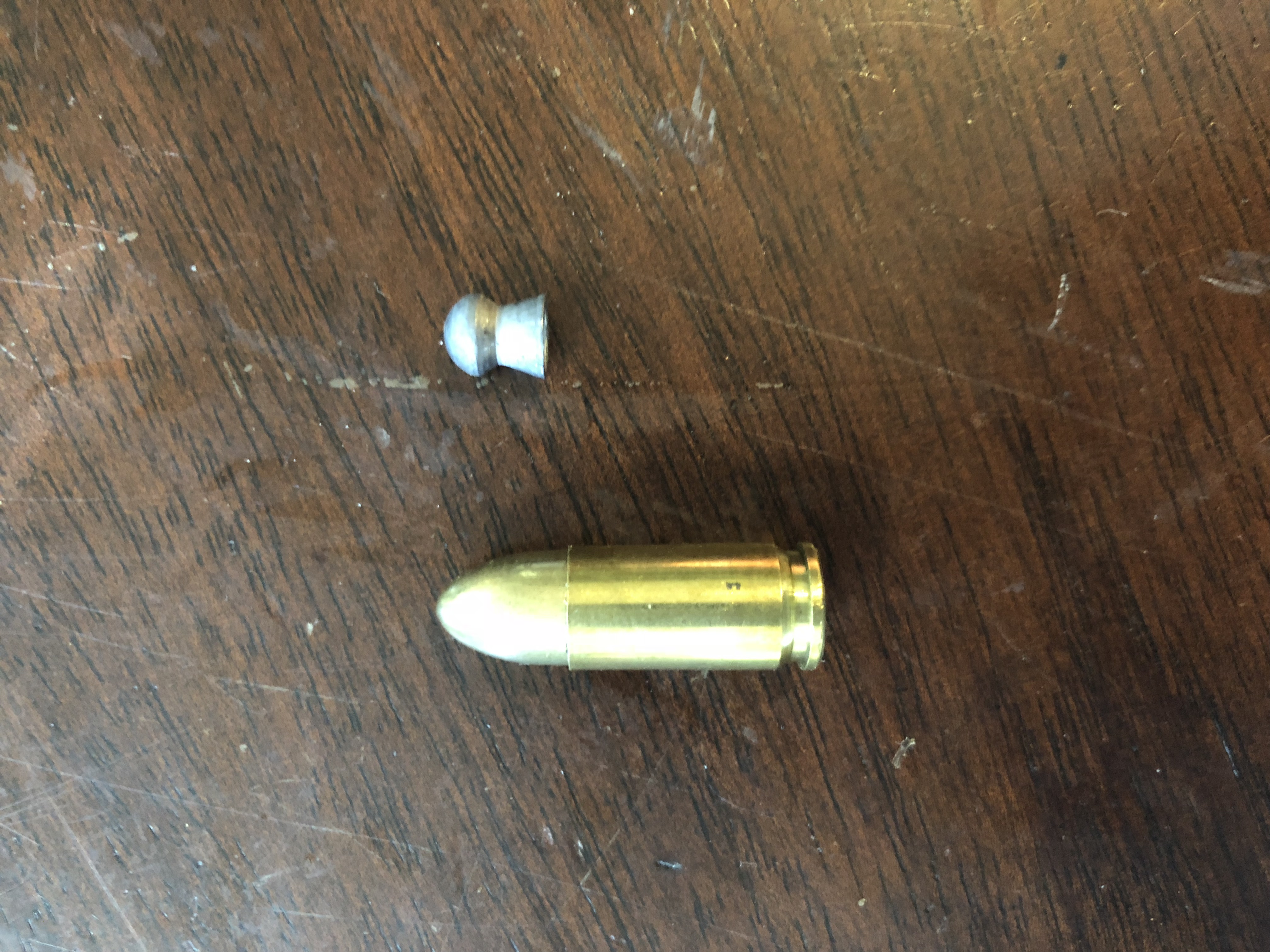
FMJ saves you money primarily at the range, where its low cost per round lets you practice trigger control and recoil management without burning through premium defensive loads. It fails you when you need reliable expansion for self-defense, because the solid metal core drills through soft tissue without mushrooming, increasing over-penetration risk. This makes FMJ the wrong choice for home defense, where a miss could exit walls and endanger others. It also fails on hard barriers—while it punches through drywall or glass better, it can ricochet unpredictably, reducing terminal effectiveness. Budget-wise, FMJ is the clear winner 6.5x57R Ammo for Sale for training volume, but its monetary savings disappear when a failure to stop leads to costly liability.

Q: When does FMJ’s cost advantage become a dangerous illusion?
A: When you carry it for self-defense, since a pass-through wound may not incapacitate an attacker, turning a “cheap” round into a medical and legal nightmare.
How Jacketed Hollow Points Behave in Gel Tests and Hidden Barriers
In standardized ballistic gelatin, jacketed hollow point performance is measured by penetration depth and expanded diameter, with FBI protocols requiring 12–18 inches. However, hidden barriers alter this baseline: heavy clothing typically plugs the hollow cavity, delaying hydraulic expansion and reducing final diameter by 10–20%, while still permitting adequate penetration. Sheet metal or drywall causes asymmetric petal deformation, often shearing off one side and producing erratic wound tracks. For concealed carry, the sequence of behavior matters: first, the bullet penetrates the barrier; second, the core retains mass; third, expansion occurs only after the cavity clears debris. Gel tests without barriers overstate expansion, so you must verify loads against denim-layered gel to predict real-world stopping power.
Practical Tips for Buying, Storing, and Caring for Your Supply
When buying handgun ammo, prioritize **defensive loads** for carry and cheaper full-metal-jacket rounds for range practice, verifying the lot number for consistency. Store your supply in a cool, dry place—ideally in sealed ammo cans with desiccant packs—to prevent corrosion and powder degradation, avoiding humidity-prone areas like garages. Rotate your stock using a first-in, first-out system so older rounds get shot first, keeping your carry ammo fresh. For care, wipe down rounds with a dry cloth before loading, and inspect brass for cracks or dents that could cause malfunctions. *Even premium ammo degrades silently, so fire a few test rounds from each new batch to confirm reliability before trusting it.* Finally, keep magazines loaded only for short periods to preserve spring tension, and never mix different brands in one magazine.
Reading Box Labels to Avoid Misfeeds and Chambering Failures
Before you dump a box into .35 Remington Ammo for Sale your magazine, glance at the label to dodge chambering failures from misfed rounds. That tiny print tells you the exact bullet shape—flat-nose or round-nose—and the cartridge length, which matters for tight or picky feed ramps. If the box says “+P” or “remanufactured,” know that shorter or softer cases can snag during the slide’s return stroke. Also, check the primer type; hard primers sometimes fail to ignite, mimicking a misfeed. Match the labeled grain weight to your recoil spring’s sweet spot—too light or heavy can cause the slide to short-stroke, leaving a round half-seated. A quick read saves you from racking, clearing, and swearing at the range.
Reading box labels prevents misfeeds and chambering failures by revealing bullet shape, case length, pressure specs, and grain weight—so your pistol cycles smoothly every time.
How Proper Storage Extends Primer Life and Keeps Ballistics Consistent
Primer stability hinges on consistent storage conditions. Heat accelerates the chemical decomposition of lead .32 ACP Ammo for Sale styphnate, while humidity causes moisture intrusion that degrades the primer compound and corrodes the case. Store handgun ammo in an airtight container with desiccant packs at a steady 60–70°F to prevent thermal cycling. Fluctuations induce condensation, which directly alters primer sensitivity—resulting in velocity shifts and pressure spikes. For long-term ballistics consistency, follow this sequence:
- Seal rounds in vacuum bags or metal cans.
- Add silica gel to absorb residual moisture.
- Place in a dark, cool closet, avoiding attics or garages.
Rotate stock annually, and always test a few rounds after prolonged storage to verify ignition uniformity.
Sighting In and Zeroing Your Pistol with Your Chosen Load
Sighting in and zeroing your pistol with your chosen load means accepting that different handgun ammo prints differently. Your zero with one brand or bullet weight rarely transfers perfectly, so start at 10 yards, fire a tight group, and adjust the rear sight in the direction you want the group to move. If your shots land left, drift the rear sight right—it feels counterintuitive but is correct. Once you settle on a defensive or target load, do all your zeroing with that exact box of ammo, not a .32 Win Special Ammo for Sale cheaper substitute for practice.
Changing lot numbers or bullet weights can shift your point of impact by an inch or more at 15 yards, so re-check your zero whenever you buy a fresh batch.
Finally, confirm your zero at your intended engagement distance—typically 15 to 25 yards—because a 10-yard zero may leave you shooting high or low when you need precision farther out.
Adjusting for Point of Impact Differences Between Light and Heavy Bullets
When switching between light and heavy bullets in your handgun, the point of impact often shifts because each weight exits the barrel at a different velocity and under different recoil dynamics. A light bullet typically prints lower at close range due to faster exit before muzzle rise peaks, while a heavy bullet may strike higher. To compensate, fire three-shot groups at your zero distance with each load, noting the vertical and horizontal offset. Adjust your rear sight in the direction you want the group to move—if heavy bullets hit high, lower the rear sight or raise the front. Because barrel lockup and twist rate interact uniquely with bullet weight, your specific pistol may show opposite effects than expected. After changing loads, always re-verify your zeroing adjustments for ammunition weight before relying on a defensive or competition hold.
Shooting Groups at 10, 15, and 25 Yards to Confirm Your Carry Ammo’s Accuracy
Confirm your carry ammo’s point of impact by firing five-shot groups at 10, 15, and 25 yards from a rested position. Start at 10 yards to verify your zero transfers from practice rounds, then move to 15 yards—a realistic defensive distance—checking that groups stay inside a fist-sized cluster. At 25 yards, expect more vertical stringing; if your defensive load prints over four inches, 6.8 SPC Ammo for Sale consider a different bullet weight. This accuracy confirmation prevents costly misses under stress, where you’ll rely on muscle memory rather than live adjustments. Remember, your gun’s mechanical accuracy matters less than the ammo’s consistency with your sights.
Q: Why test at 25 yards for carry ammo if most fights happen closer?
A: Because a load that holds a tight group at 25 yards will be laser-precise at 7–10 yards, giving you confidence that fliers are shooter error, not ammunition drift.
Common Failures, Misfires, and How to Troubleshoot Them Quickly
When a handgun round fails to ignite, first wait ten seconds, then clear the chamber and inspect the primer; a light strike suggests a weak hammer spring or a high primer, while a deep mark with no bang indicates a dead primer. For a failure to feed, tap the magazine base and rack the slide once, but if the round is wedged at an angle, lock the slide back and manually extract the stuck cartridge. A squib load, characterized by a weak pop and reduced recoil, demands immediate action: stop firing, clear the weapon, and check the barrel for an obstruction before anything else—never assume the next round will clear it. Misfires from dented cases often trace to a rough chamber or a worn extractor, so scrutinize ejected brass for rim damage. Rapid troubleshooting hinges on distinguishing https://specialtysportsandsupplyltd.com/ between ammunition faults and firearm faults, as swapping mags rarely fixes a broken firing pin. Finally, if a slide fails to return to battery after a reload, give the slide a firm palm strike, but if it refuses, strip the magazine and inspect for a bent feed lip or an over-long cartridge.
Clearing Squib Loads and Hangfires Without Panic or Damage
A squib load occurs when a bullet lacks sufficient propellant, lodging in the barrel; a hangfire is a delayed ignition. In both cases, **maintain muzzle discipline and wait thirty seconds** before clearing. For a squib, stop firing immediately, lock the Ammunition for Sale slide back, and check the bore for obstruction—a second round fired into a blocked barrel causes catastrophic damage. For a hangfire, keep the muzzle pointed downrange, wait, then eject the round and inspect it. Never strike the slide or use tools to force extraction; follow a methodical, tactical pause to ensure safety and preserve firearm integrity.
Q: What is the fastest safe way to confirm a squib load?
A: After the mandatory wait, insert a cleaning rod through the muzzle; if it stops short of the chamber, the bore is blocked and the firearm must be disassembled for rod-tapping out the bullet from the breech end.
Why Ammo Won’t Chamber Fully and How to Safely Un-stick a Rounded
A cartridge that fails to seat fully usually indicates excess friction or debris in the chamber, often from carbon buildup, a burred extractor, or a slightly out-of-spec case rim. Do not force the slide forward—this can dent the bullet or damage the extractor. To un-stick a rounded round, first lock the slide to the rear and visually confirm the obstruction. Then, firmly tap the rear of the slide with a rubber mallet or push the slide forward with your support hand while pressing the muzzle against a solid surface. If the round remains, remove the magazine and carefully use a cleaning rod from the muzzle end to push the cartridge rearward out of the chamber. Finally, inspect the chamber for residue and polish if necessary. Never strike the primer while the round is lodged.